
How Stainless Steel Standoffs Enhance Durability And Aesthetics for Modern Displays?
Apr 20, 2026
Introduction
In today's highly competitive market, visual presentation and structural integrity are critical determinants of design excellence. Stainless steel standoffs have emerged as a preferred hardware solution among architects, interior designers, and signage professionals seeking a balance of mechanical reliability, aesthetic refinement, and long-term durability. This article examines the functional advantages of stainless steel standoffs, outlines key application domains, and provides evidence-based guidance for selecting the appropriate standoff type-considering material grade, load requirements, environmental exposure, and design intent.
What Are Stainless Steel Standoffs?
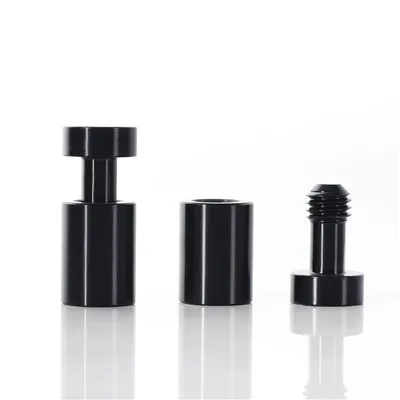
Stainless steel standoffs are precision-engineered cylindrical spacers designed to maintain a consistent, controlled distance between mounted elements-such as signage panels, glass partitions, or architectural cladding-and their supporting substrates. Fabricated from high-grade austenitic stainless steel (typically ASTM A276 Type 304 or marine-grade 316), they exhibit exceptional resistance to corrosion, oxidation, and surface degradation-even under prolonged exposure to humidity, saline environments, or chemical agents. Their primary applications include:
• Metal and acrylic signage systems
• Tempered glass partitions and balustrades
• Exterior and interior architectural cladding assemblies
• Decorative wall-mounted panels in commercial and institutional interiors
Why Choose Stainless Steel Standoffs Over Alternative Materials?
1. Outstanding Corrosion Resistance
Grades 304 and 316 stainless steel provide superior protection against atmospheric moisture, chlorides, and mild industrial contaminants-making them suitable for both interior installations and demanding exterior or coastal environments.
2. High Structural Load Capacity
Engineered to withstand static and dynamic loads without deformation, stainless steel standoffs ensure dimensional stability and panel alignment over time-critical for large-format or heavy-gauge installations.
3. Aesthetic Versatility and Design Integration
Available in polished, satin-brushed, or PVD-coated finishes, these standoffs enhance visual sophistication by enabling a "floating" installation effect while maintaining clean sightlines and minimalist detailing.
4. Minimal Maintenance and Extended Service Life
Unlike aluminum (prone to galvanic corrosion in mixed-metal assemblies) or polymer-based alternatives (susceptible to UV degradation and creep), stainless steel retains its mechanical properties and surface integrity with negligible routine maintenance-supporting lifecycle cost efficiency and sustainability objectives.
Key Application Contexts
• Corporate Environments: Enhance brand perception through refined, consistent signage systems in lobbies, executive suites, and conference facilities.
• Retail Spaces: Achieve premium visual impact via elevated, shadow-gap-mounted displays that emphasize product focus and spatial clarity.
• Trade Show and Exhibition Installations: Support rapid, tool-free assembly and disassembly across multiple venues without compromising structural fidelity.
• Hospitality and Wellness Facilities: Deliver reliable performance in high-moisture zones-including restrooms, spas, and poolside areas-where hygiene, safety, and aesthetics converge.
优化后文本:
How to Select the Appropriate Stainless Steel Standoffs
1. Material Grade
• 304 stainless steel is suitable for general indoor applications, offering excellent corrosion resistance under typical environmental conditions.
• 316 stainless steel is recommended for coastal environments, high-humidity locations, or any setting where exposure to chlorides or saline aerosols is expected, owing to its superior pitting and crevice corrosion resistance.
2. Dimensions and Surface Finish
• Diameter selection (e.g., 10 mm, 12 mm) should be determined by structural requirements-including panel weight, span, and load distribution-to ensure adequate mechanical support.
• Surface finish options-such as polished mirror or satin brushed-should be selected to align with architectural intent and aesthetic continuity across the façade or interior scheme.
3. Mounting Configuration
• Through-panel standoffs provide optimal rigidity and load-bearing capacity, making them ideal for permanent installations requiring high structural integrity.
• Threaded standoffs facilitate non-destructive panel removal and future maintenance or system upgrades, supporting flexible design lifecycle management.
4. Spacing and Projection Distance
• A standard projection of 20–30 mm achieves a visually distinct floating effect while maintaining dimensional consistency and ease of fabrication.
• Custom spacer lengths are available to accommodate deeper shadow lines, atypical substrate depths, or specialized lighting integration requirements.
Standard vs. Custom Standoffs: When to Choose Which?
• Standard standoff kits offer cost efficiency, rapid procurement, and proven performance for signage, interior cladding, and decorative panel systems with conventional dimensional parameters.
• Custom-machined standoffs are advised for architecturally complex projects involving non-standard panel thicknesses, unique load paths, bespoke geometric configurations, or specialized surface treatments (e.g., PVD coatings, electropolished finishes).
Frequently Asked Questions (FAQs)
Q: Are stainless steel standoffs suitable for exterior applications?
A: Yes-particularly grade 316 stainless steel, which demonstrates exceptional resistance to salt-air corrosion and is widely specified for marine-exposed and aggressive urban environments.
Q: What is the recommended cleaning procedure for stainless steel standoffs?
A: Clean regularly using a soft, non-abrasive cloth and a neutral pH detergent solution. Avoid chlorine-based cleaners, steel wool, or abrasive pads, as these may compromise the passive oxide layer and mar the surface finish.
Q: Is professional installation required?
A: While smaller-scale installations may be executed by qualified in-house personnel, professionally certified installers are strongly recommended for large-format, heavy, or safety-critical applications to ensure precise alignment, proper torque application, and compliance with structural and building code requirements.
Conclusion
Integrating stainless steel standoffs into architectural and interior projects enhances both visual sophistication and long-term functional reliability. Whether specifying for a corporate lobby, retail storefront, museum façade, or public infrastructure, these engineered components deliver a harmonious balance of form, durability, and performance-thereby reinforcing brand identity, improving spatial perception, and supporting sustainable design objectives.