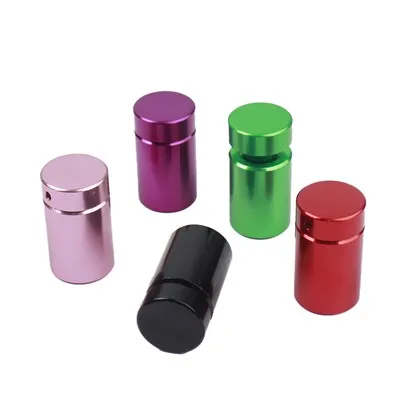


A Guide to Spacers and Standoffs
Mar 18, 2024
Spacers and standoffs are important types of fastener accessories. They are used to create clearance gaps between two or more joined surfaces or components. This is crucial in various assemblies, especially PCB installations and other electrical builds. Spacers also enable the precise positioning of screws or bolts in parts and materials.
This guide to screw or bolt spacers is designed to give all the basic information you will need when choosing and buying spacers for screws online.
By the end of the guide, you will be familiar with exactly what the definition of a spacer is, and the technical differences between them and standoffs.
You will also know which materials are widely available for various spacer applications in the UK, and which are the best spacers or standoffs to buy for your needs.
What is the Function of a Spacer?
A screw spacer is a small hollow tube or cylinder. Using a spacer involves positioning it between the surface you are driving it into, and the head of a screw or bolt. In simple terms, using a spacer ensures that the screw or bolt cannot be driven all the way in.
The hollow body of a spacer is designed to allow the shaft of a screw to pass completely through it before entering the surface material. This forces a gap to be kept between the screw head and the material or component below, while still allowing the fastener to be properly torqued.
As well as creating a clearance gap, spacers can also assist with the precise positioning of screws and bolts. Most spacers are smooth on the inside and will remain free-spinning until clamped in place by tightening the screw.
Spacers are typically made of metal, but for certain jobs, you may need to use other spacer materials. Nylon is a common choice for spacers that need to be non-conductive. Depending on their intended use, they might also be listed as screw insulators for this reason.
What is the Function of a Standoff?
A standoff spacer, often referred to simply as a standoff, works in much the same way as a standard screw spacer. The main difference between a spacer and a standoff is that standoffs are also threaded at each end, while spacers typically are not.
This threading is gendered, meaning it can either be male (protruding) or female (internal). Available gender combinations for standoffs are male-male, female-female, or male-female.
A male-male standoff has two threaded protrusions and can be screwed into a hole at either end. A female-female standoff can accept a screw or bolt at either end. A male-female threaded standoff can be screwed into a hole at one end while having a screw inserted at the other.
This makes standoffs different to spacers, which are not driven into the material they are positioned against and are not threaded for accepting a screw either. A spacer, unlike a standoff, is generally held in place only by the torque force between the screw and the surface below.
How are Spacers and Standoffs Used?
Spacers and standoffs are a common standard for assembling circuit boards, gears, panels, doors, and other electronic components.
One of the most familiar uses of standoffs and spacers is in computing. Motherboard standoffs are almost always inserted between a PCB and the computer case or chassis. This helps to avoid short circuits (shorting) caused by motherboard traces coming into contact with other metallic parts or surfaces. It also aids cooling by enabling increased airflow around the motherboard and its mounted components.
Spacers are also widely used in various other applications, particularly mounting hardware. They help to achieve more precise positioning of screws and bolts, with adequate gaps left for airflow and cabling. Some bolt spacers also serve to make certain screw-in connections more robust.
There are various types of spacers and standoffs available to order online. They are generally cheap to buy and simple to use, provided you choose the right kind for your intended application.
When selecting these fasteners for a particular job, there are four main factors to consider:
Spacer or standoff shape (usually round or hex, sometimes square)
Body diameter (outer width)
Body length
Hole clearance width or thread size (inner diameter)